


Tempered glass is a special type of glass that has undergone a unique heat treatment and cooling process, resulting in a compressive stress pattern on its surface, which enhances its strength and safety performance. Tempered glass is widely used in industries such as construction, automotive, and furniture.
The manufacturing process of tempered glass involves the following steps:
Material preparation: High-purity float glass or processed glass are used as raw materials.
Cutting: The glass is cut to the desired size and shape. If it's for a component, then it's cut to match the specific dimensions needed.
Cleaning: The glass is cleaned using a cleaning agent to remove dust and dirt from its surface.
Edge-polishing: The edges of the glass are polished after cutting to form a round corner, which helps to avoid any damage to the edge.
Pre-bending: The glass is pre-bent in a furnace to suit the requirements of subsequent processing.
Glass strengthening: The glass is rapidly cooled in a high-temperature state, forming compressive stress on the surface, which enhances the strength and toughness of the glass.
Inspection and testing of tempered glass to ensure it meets national safety standards.
Cutting of tempered glass into various shapes and specifications as required.
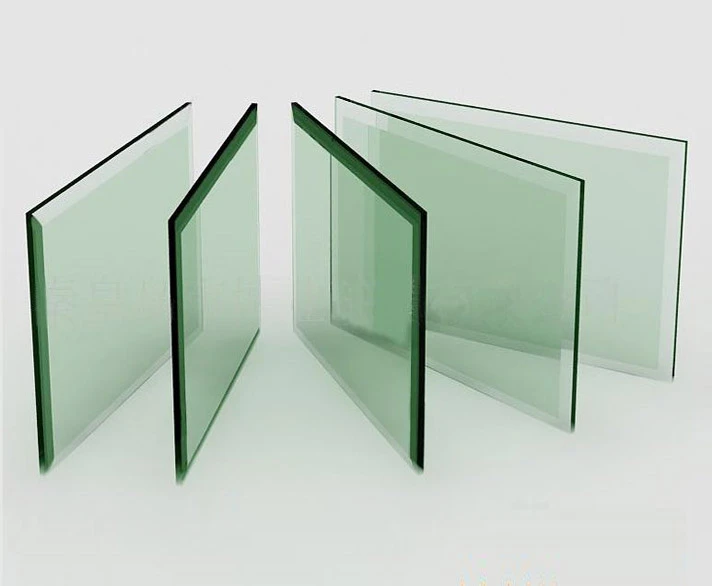
Characteristics of tempered glass:
High strength: The strength of tempered glass is more than five times that of ordinary glass, allowing it to withstand greater pressure and impact force.
High safety: When tempered glass breaks, it shatters into small particles, resembling a honeycomb structure, and does not produce sharp edges, greatly reducing the risk of injury to people.
Privacy: Tempered glass can achieve good privacy protection, making it suitable for use as partitions or windows to enhance indoor privacy.
Optical properties: The optical properties of tempered glass, such as light transmission and refractive index, are the same as those of ordinary glass.